
Rafter & Alder shares practical, down-to-earth guidance on loft conversions, attic storage and home organisation for uk homes for readers across the UK.
- 0123456789
- Angle Bd Abdelmoumen & rue soumaya, Résidence
- [email protected]
Rafter & Alder shares practical, down-to-earth guidance on loft conversions, attic storage and home organisation for uk homes for readers across the UK.
 By Callum Fraser
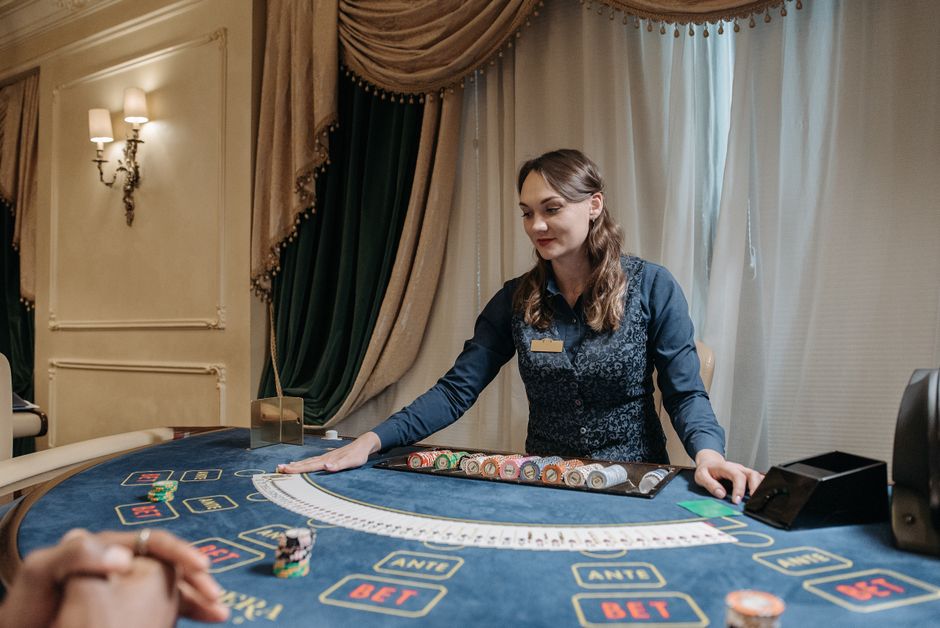
Every slot player has heard the phrase "this machine is due." It is the most persistent myth in gambling, and it costs people real money. The idea that a slot that hasn't paid out in hours is somehow closer to a jackpot is not just wrong—it is the opposite of how these machines actually work. If you understand return-to-player percentages and volatility, you stop guessing and start making decisions that at least give you a fighting chance. That's not a guarantee of profit. Nothing is. But it is the difference between playing with a plan and playing on superstition.
Return to player, or RTP, is the theoretical percentage of all wagered money a game pays back to players over millions of spins. A 96% RTP slot keeps roughly 4 cents of every dollar bet and returns 96 cents. That number is calculated over an enormous sample size—usually tens of millions of rounds. Over a single session of 200 spins, you might win big or lose everything. The RTP is a long-run average, not a promise for your Tuesday night.
Where this gets interesting is the house edge. On a 96% RTP slot, the house edge is 4%. Compare that to American roulette at 5.26%, blackjack with basic strategy at roughly 0.5%, or baccarat banker bets at 1.06%. Slots sit in a strange middle ground: worse than skilled table games, better than keno or most lottery-style bets. That context matters. If you are going to play slots, at least choose ones with 96% or higher RTP. Many popular titles sit at 94% or even lower, especially older machines and certain branded games.
One more wrinkle: some online casinos publish RTP ranges rather than fixed numbers. A single game might be set at 94%, 96%, or 97% depending on the operator. Legally, they don't always have to tell you which version you're playing. That alone should push you toward casinos that list per-game RTP data openly.
RTP gets all the attention, but volatility (sometimes called variance) has a bigger impact on your session. Volatility describes how the payouts are distributed. A low-volatility slot pays small amounts frequently. A high-volatility slot pays rarely but can pay huge.
Consider two slots, both with 96% RTP: If you want to dig deeper, FAFA828 is a useful place to start.
Both have the same RTP. Both will, over an infinite timeline, return the same percentage. But if you sit down with $100, Slot B will feel like a different game entirely. This is why two players can play identical RTP games and have wildly different experiences.
The practical takeaway: match volatility to your bankroll. If you have $50 and want an hour of play, low volatility is your friend. If you have $500 and you're chasing a headline jackpot, high volatility slots like Gates of Olympus or Money Train 3 can make sense—as long as you accept that most sessions will end with a zero on the meter and no bonus round.
Here's something the casino floor rarely says out loud: slots and poker are not the same category of gambling. They just happen to live in the same building.
Slots are pure chance. The RNG (random number generator) determines every outcome independently. Nothing you do—how long you press the button, how fast you spin, what machine you choose—changes the probability of the next spin. The house edge is fixed. Your only real decision is whether to play and how much to stake.
Poker is the opposite. You are playing against other people, and the house takes a rake (a percentage of each pot). In a $1/$2 no-limit hold'em game, the rake might be 10% capped at $5. A skilled player can overcome that rake. An unskilled player cannot. The edge belongs to whoever makes better decisions, and over thousands of hands, the better player wins. That is why professional poker players exist and professional slot players do not.
If your goal is to win money over time, poker is the only realistic avenue between those two. If your goal is entertainment with a clear cost, slots deliver that honestly—once you understand the cost.
Most bankroll advice is vague nonsense like "only bet what you can afford." True, but useless. Here's a more concrete framework.
Bonuses are where online casinos make back their marketing spend. A 100% deposit match up to $500 sounds generous until you read the wagering requirement: 40x. That means you must bet $20,000 before withdrawing anything. On slots with a 4% house edge, you'll lose roughly $800 in expected value while clearing that bonus—more than the bonus itself if you deposited the full $500.
To evaluate a bonus, divide the bonus amount by the wagering requirement. A $100 bonus with 30x wagering means $3,000 in required bets. At a 96% RTP slot, expected loss is $120. That bonus is worth less than the deposit you'll likely lose clearing it. The only worthwhile bonuses are low-wagering, no-deposit offers, or reload bonuses on games with above-average RTP that you were going to play anyway.
The moment you stop expecting slots to pay for your dinner, you start enjoying them. That sounds like a downer, but it's actually liberating. When you accept that a slot session is an entertainment expense—like a concert ticket or a nice bottle of wine—you can play without the background hum of desperation that ruins the experience and, frankly, makes you play worse.
That doesn't mean you can't win. You can. People hit $50,000 jackpots every day. But you cannot predict when, and you cannot force it. The players who leave the casino with money are the ones who brought a plan, stuck to it, and left when the plan said leave. Everyone else is just funding the jackpot that someone else will eventually hit.


We are not gonna make spamming
