
Rafter & Alder shares practical, down-to-earth guidance on loft conversions, attic storage and home organisation for uk homes for readers across the UK.
- 0123456789
- Angle Bd Abdelmoumen & rue soumaya, Résidence
- [email protected]
Rafter & Alder shares practical, down-to-earth guidance on loft conversions, attic storage and home organisation for uk homes for readers across the UK.
 By Callum Fraser
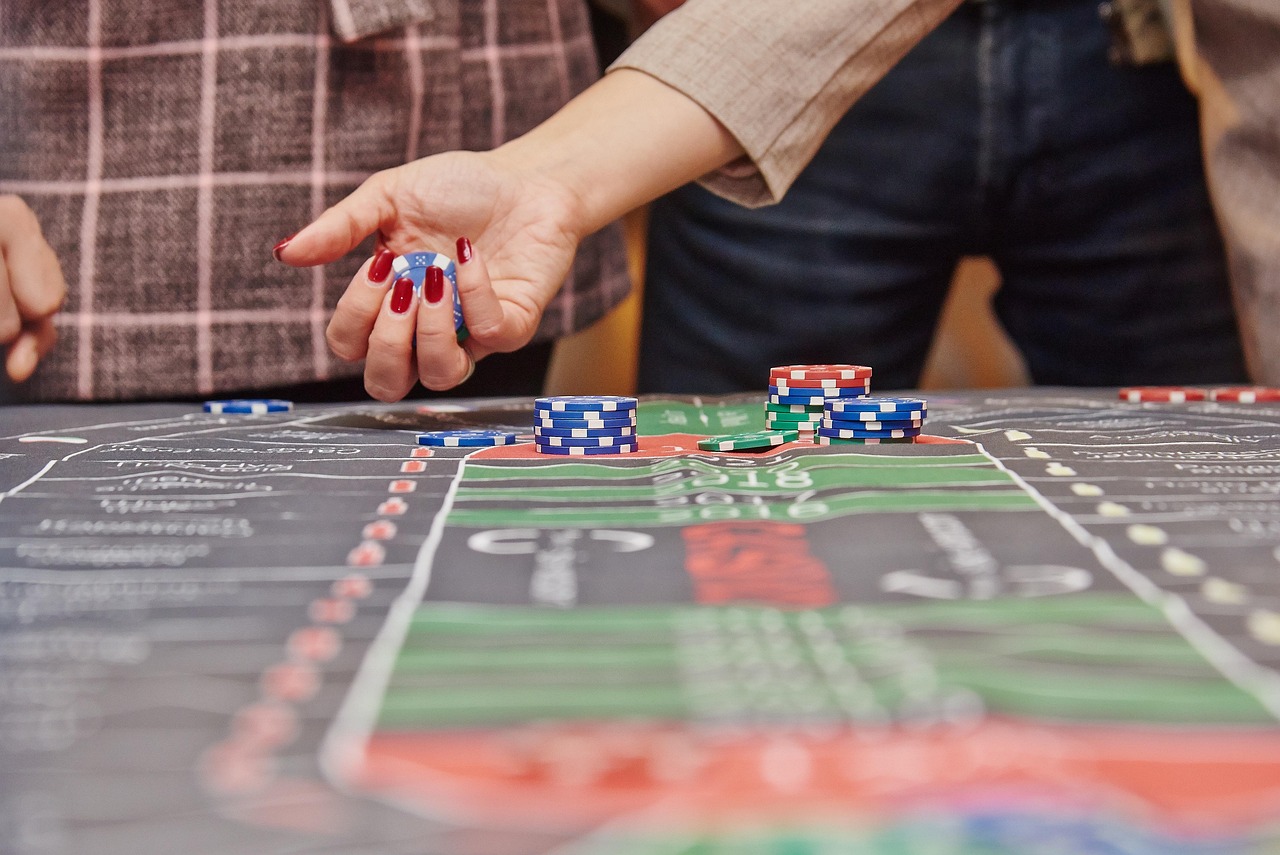
Walk into any casino, physical or digital, and you'll see the same scene: rows of glowing screens, hypnotic spin cycles, and faces locked in that peculiar mix of hope and resignation. Slots are the undisputed heavyweight champion of casino revenue, generating somewhere between 60 and 80 percent of gaming floor income depending on the jurisdiction. Yet most players couldn't explain what a return-to-player percentage actually means if you woke them at 3 a.m. That gap between popularity and understanding is where money quietly changes hands.
This isn't a lecture about quitting. It's the opposite. If you're going to play, play like someone who knows what's happening under the hood. That knowledge won't guarantee wins, but it changes how you choose machines, how you budget, and how you react when a session goes sideways.
Return-to-player, or RTP, is the theoretical percentage of all wagered money a slot returns to players over millions of spins. A 96% RTP game keeps 4% for the house in the long run. That sounds tiny. Now multiply it: feed a 96% slot $500 across a weekend and the expected loss is about $20. Feed a 92% slot the same amount and it's $40. The difference between "good" and "bad" slots is rarely more than four or five percentage points, and over a long session those points are the whole ballgame.
Here's the part most players miss: RTP is a long-run average, not a promise for your session. A slot with 96% RTP will absolutely gut your $100 bankroll in twenty minutes. What it won't do is return only 96% of your specific money over the next hour. Variance does that work, and variance is governed by a second number most people ignore: volatility.
Two slots can share a 96% RTP and behave nothing alike. A low-volatility game might pay you $0.40 on a $0.50 spin every few turns. A high-volatility game might eat $150 before dropping a 500x multiplier. Neither is better. They demand different bankrolls and different temperaments.
Slots get the attention, but table games and sports betting reward skill in ways spinning reels never will. The reason is simple: in poker and sports betting, you're not playing against the house in the same way. You're playing against other people, and the house takes a rake or a commission.
Blackjack is the clearest example. A player using basic strategy reduces the house edge to roughly 0.5%. Play badly, hit when you should stand, split tens, and that edge balloons past 2%. Same game, same cards, wildly different outcomes based purely on decisions.
Poker is stranger still. Cash game rakes typically run 5% up to a cap, which means the house wins regardless of who takes the pot. Your edge comes from outplaying opponents, not beating the dealer. That's why game selection at poker tables matters more than card selection. Sitting at a table full of sharks with the same rake as a table full of tourists is the fastest way to bleed money while feeling like you're "just running bad." Before making a choice, it helps to review สล็อตเว็บตรง.
Sports betting splits into two philosophies. Casual bettors chase parlays and longshots, where the sportsbook's margin compounds across every leg. Sharper bettors hunt for pricing inefficiencies, line moves, and market disagreements. A single bet at -105 instead of -110 doesn't sound like much, but over hundreds of wagers it decides whether you're a long-term winner or a statistic.
Most players open a game, glance at the theme, and hit spin. Pros do something different. They open the paytable first, and they look for four things.
This takes two minutes. Two minutes that can save you an hour of confused frustration on a machine that was never going to behave the way you expected.
You can't control variance. You can control how much of it you're exposed to. That's the entire game within the game.
A workable rule: never buy into a slot session with more than 100 to 200 times your average spin size. If you're spinning at $1, a $150 bankroll gives you enough runway to survive normal downswings and actually reach a bonus round. Spinning $5 with $150 means ten minutes of entertainment, tops.
Separate your bankrolls by discipline. Slot money is not poker money. Poker money is not sports betting money. When you blur the lines, you make emotional decisions that no amount of strategy can rescue.
Near-misses light up the same reward pathways as actual wins. Two scatters on a five-scatter bonus trigger feels "close." It isn't. It's a designed outcome with a probability attached, and that probability didn't change because the reels teased you.
Losses disguised as wins do the same thing. Win $0.30 on a $1 spin and the machine still plays a celebration animation. Your brain registers "win" while your bankroll registers "loss." Recognizing this doesn't make you immune. It makes you aware, and awareness is worth real money over a year of play.
The players who last aren't the ones with the best luck. They're the ones who set a stop-loss before they sit down, who treat bonuses as entertainment value rather than income, and who understand that the house edge is real whether or not they feel it tonight.
iGaming covers a spectrum. On one end, pure chance with a fixed mathematical edge. On the other, games where decisions compound into measurable skill advantages. Knowing where any given game sits on that spectrum is the difference between spending money and investing it in entertainment.
Play the slots for fun with money you can lose without a second thought. Play poker and blackjack like someone studying an opponent and managing a portfolio. Bet sports with discipline or not at all. And every time you open a new game, spend the two minutes reading the rules. The math doesn't care about your gut feeling. It just keeps working, spin after spin, hand after hand, whether you understand it or not. Better to be the player who does.


We are not gonna make spamming
