
Rafter & Alder shares practical, down-to-earth guidance on loft conversions, attic storage and home organisation for uk homes for readers across the UK.
- 0123456789
- Angle Bd Abdelmoumen & rue soumaya, Résidence
- [email protected]
Rafter & Alder shares practical, down-to-earth guidance on loft conversions, attic storage and home organisation for uk homes for readers across the UK.
 By Callum Fraser
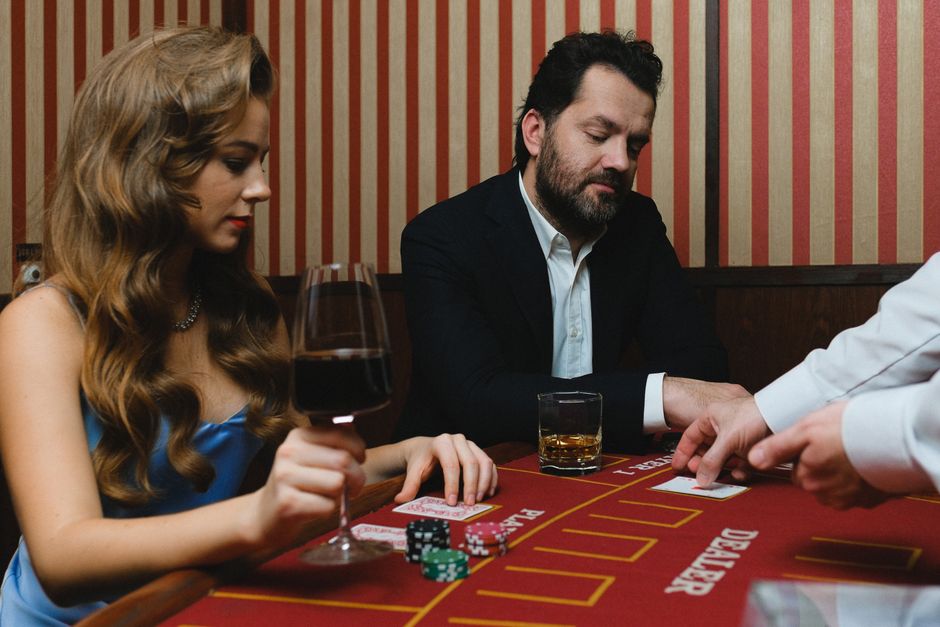
The most seductive lie in gambling isn't printed on a casino billboard or whispered by a bonus-hungry affiliate. It's the little voice in your head that says: "I'm due." After eight red spins on the roulette wheel, red feels inevitable. After a slot goes cold for forty dead spins, it's "warming up." This cognitive glitch — the gambler's fallacy — has bankrupted more players than any rigged deck ever could. And yet, the operators know something most punters don't: variance isn't your enemy. Misunderstanding it is.
Every regulated slot machine publishes a Return to Player percentage, usually somewhere between 94% and 97%. New players read that as "I get back 96 cents for every euro I put in," which is technically true across millions of spins — and practically useless for your Tuesday night session.
Here's the reality. A 96% RTP means the house edge is 4%. On a €100 bankroll wagering €1 per spin, the expected loss per spin is four cents. But expected value only converges over vast sample sizes. In a 300-spin session, your actual result could swing from a healthy profit to a complete wipeout, and both would be statistically unremarkable. Volatility matters more than RTP for short sessions.
The practical takeaway: pick volatility that matches your bankroll, not your fantasy. A €20 bankroll on a 96% RTP high-volatility slot is a lottery ticket. The same €20 on a low-volatility game buys you an evening of entertainment with a real (if modest) chance of finishing ahead.
Slots are pure chance. Poker is not — and that distinction is where skill actually compounds. A solid cash-game player might hold a win rate of 5 big blinds per 100 hands. At €1/€2 no-limit, that's €10 per 100 hands. Over a 1,000-hand week, an expected €100 profit sounds nice until you account for standard deviation, which in that same sample can easily exceed €500.
This is why good poker players can post losing months while still playing perfectly. The edge is real, but it's thin, and it only materializes over tens of thousands of hands. Two habits separate winners from break-even grinders:
One more thing most recreational players overlook: rake. At micro stakes, a 5% capped rake can turn a theoretically winning strategy into a losing one. The lower the limit, the more rake devours your edge. Move up to a stake where the rake is a smaller fraction of the pot — but only when your bankroll can absorb the swings. Those comparing choices often turn to SHBET.
Bookmakers don't gamble. They price. When you see a two-way market at 1.91 and 1.91, the implied probabilities are 52.4% each — summing to 104.8%. That extra 4.8% is the margin, and it's the operator's guaranteed cut regardless of the outcome. Beat that margin consistently and you're a profitable bettor. Most people are not.
Where can you find an edge?
Welcome bonuses are marketing, but they're not always bad deals. The trick is separating the headline from the fine print. A 100% match up to €200 sounds generous until you find a 40x wagering requirement on the bonus alone. That means €8,000 in wagers before a single cent is withdrawable. At a 4% house edge, the expected loss on that turnover is €320 — wrecking the apparent value.
Before claiming anything, check these four numbers:
Theory is easy. Discipline is hard, especially when a slot is teasing a near-miss and your session profit just evaporated. A few rules I've seen hold up over years of play:
None of this guarantees a profit. Nothing in iGaming does. But it turns gambling from a coin flip against yourself into a manageable cost of entertainment — or, for the genuinely skilled, a grindable edge.
There's a strange comfort in slots that doesn't exist at the poker table: you can't make a mistake. The reels spin, the RNG does its work, and your only decisions are stake size and when to walk. Poker and sports betting reward study and punish complacency. Slots charge a flat, honest toll. The mistake most players make is applying the mindset of one to the other — treating a high-volatility slot like a skill game you can ride out, or treating a sports bet like a lottery ticket you have no control over. Before making a choice, it helps to review SH BET.
The house edge is real. Variance is real. But so is the fact that disciplined players lose less, extract more value from bonuses, and occasionally — with a bit of study and a lot of patience — finish in the black. Know your game. Know your numbers. And never trust the voice that says you're due.


We are not gonna make spamming
