
Rafter & Alder shares practical, down-to-earth guidance on loft conversions, attic storage and home organisation for uk homes for readers across the UK.
- 0123456789
- Angle Bd Abdelmoumen & rue soumaya, Résidence
- [email protected]
Rafter & Alder shares practical, down-to-earth guidance on loft conversions, attic storage and home organisation for uk homes for readers across the UK.
 By Callum Fraser
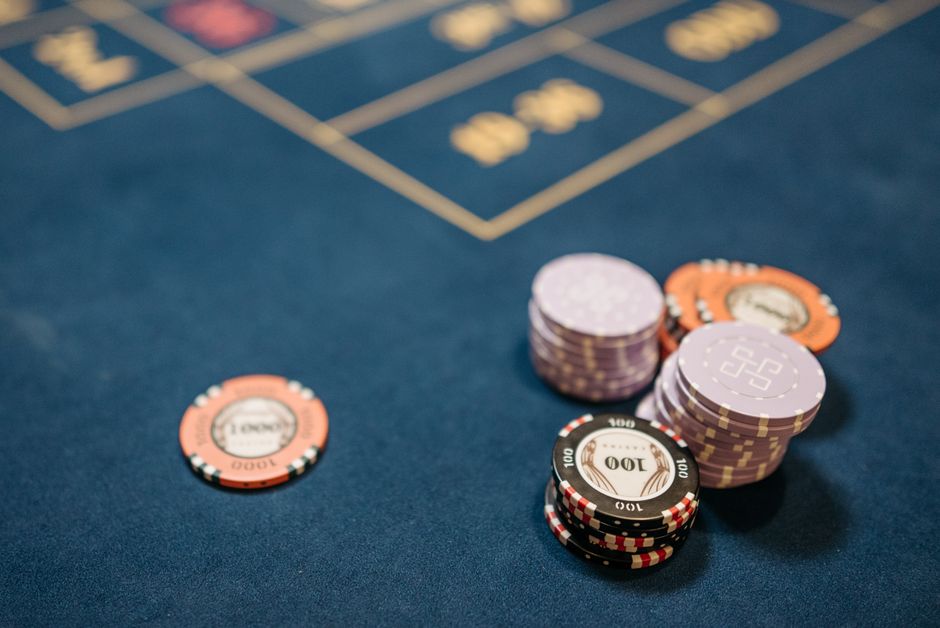
Every gambler eventually asks the same question: is this actually beatable, or am I just paying for entertainment with extra steps? The honest answer depends entirely on which game you're playing, how you're playing it, and whether you understand what you're up against. Let's cut through the marketing fluff and look at how slots, table games, poker, and sports betting actually work from a mathematical and practical standpoint.
Slots are the backbone of every casino floor, online or off, and for good reason. They're simple, fast, and require zero decision-making. That last part is exactly why they're the toughest games to beat.
The house edge on a typical slot machine sits somewhere between 2% and 8%, with some high-volatility titles pushing past 10%. Compare that to blackjack played with basic strategy (roughly 0.5% edge) and you start to see why seasoned players tend to avoid slots as a serious money-making tool.
What you actually control on a slot is this:
If you're playing slots, play them for entertainment. Pick machines with higher RTP (many jurisdictions publish this data), set a loss limit before you spin, and never chase a bonus feature believing it's "due." It isn't. Each spin is independent in modern RNG-based slots.
If you want a fighting chance, table games are where you go. But not all tables are equal.
Basic strategy blackjack is one of the few games where a reasonably intelligent player can get the house edge under 1%. Learn the chart, avoid 6:5 payout tables, and understand that card counting still works in theory — though online RNG shuffle makes it nearly impossible in practice. Further details are available through 88CLB.
Often dismissed as a high-roller's game, baccarat actually offers some of the best odds on the floor. The banker bet carries a house edge of about 1.06% (after commission). The player bet is closer to 1.24%, and the tie bet — the sucker bet — sits around 14%. Avoid the tie. Always.
European roulette (single zero, 2.7% edge) versus American roulette (double zero, 5.26% edge) is a stark reminder that rules matter. Same game, twice the disadvantage. If you're at a real table and have a choice, always pick European.
Here's the big secret the casino industry doesn't shout about: poker is not a house-banked game. You're not playing against the casino; you're playing against other players. The house simply takes a rake, usually between 2.5% and 10% of each pot, capped at a fixed amount.
That changes everything. Skilled poker players can — and do — win consistently. But "skilled" is doing a lot of work in that sentence.
Poker rewards:
The rake still grinds away at your win rate, which is why beating low-stakes online games is harder than ever. Rakeback programs and smart game selection (table selection matters more than many players admit) can tip the scales back in your favor.
Sports betting has exploded in popularity, but the bookmaker's edge — the vig or juice — sits around 4% to 5% on standard -110 lines. That means you need to win roughly 52.4% of your bets just to break even. Consistently hitting that number is genuinely difficult.
Where sharp bettors find an edge:
If you're betting for fun, embrace the entertainment cost. If you're betting to profit, treat every wager like a business decision with a documented thesis.
Every iGaming site dangles welcome bonuses, free spins, and cashback offers. These aren't free money — they're marketing with strings attached. The binding string is usually the wagering requirement, expressed as a multiple of the bonus (or bonus plus deposit).
A typical offer might be "100% up to $200 with 35x wagering." That means you need to bet $7,000 before withdrawing anything. Combine that with game weighting (slots might count 100%, but blackjack might count 10% or not at all), and the effective value of the bonus drops fast.
The sweet spot? Bonuses with low wagering, high game weightings, and long expiry windows. Anything above 40x wagering is usually not worth the lockup unless you planned to play heavily anyway.
The vast majority of casino revenue comes from a small fraction of players who either don't understand the math or don't care about it. Knowing the difference between entertainment spending and expected value is what separates a disciplined player from a losing one. A detailed guide is available at 88CLB COM.
Pick games where skill reduces the edge. Play within limits you've set in advance. Treat bonuses as what they are — conditional rewards. And if you're playing for the long haul, remember that survival is a strategy in itself. The house always has an edge, but the size of that edge is often up to you.


We are not gonna make spamming
